 Smart Air
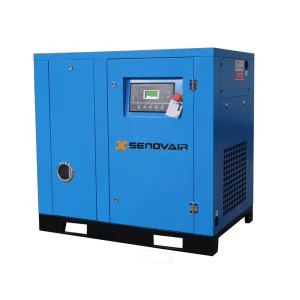
Industrial Whitepaper: Energy Optimizations in PM VSD Screw Air Compression
Authoritative engineering insights on permanent magnet synchronous motors, variable flow algorithms, and macro-system solutions.
1. Technological Trends in PM VSD Screw Air Compressors
The global industrial landscape is experiencing a massive pivot toward carbon neutrality and stricter energy conservation policies. Within this shift, compressed air systems—which traditionally consume up to 10% to 20% of an industrial facility’s entire electricity budget—are receiving extreme scrutiny. The integration of Permanent Magnet Variable Speed Drive (PM VSD) technology represents a major evolution in mechanical design.
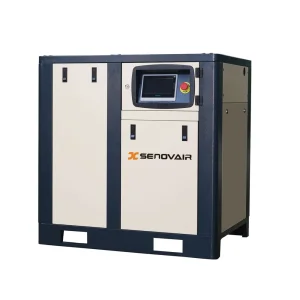
Historically, standard rotary screw compressors utilized induction motors that suffered from severe energy penalties under partial load. The development of permanent magnet synchronous motors (PMSM) using Neodymium Iron Boron (NdFeB) magnets has changed this. These motors maintain near-peak electrical conversion rates even at extremely low rotational frequencies. The latest technological trend involves high-temperature demagnetization protection, direct-drive co-axial integration (avoiding transmission losses through belts or gearboxes), and dual-stage air-end arrangements to approach ideal isothermal compression curves.
2. Global Procurement Criteria & Decision Matrix
Procurement managers and engineering directors look at more than just the initial price when sourcing industrial compressed air infrastructure. The metric that matters is Total Cost of Ownership (TCO), where electricity costs constitute over 75% of the machine's lifetime valuation. Key considerations include:
- Specific Energy Consumption (SEC): Buyers demand verified testing metrics according to ISO 1217 Annex C, detailing the exact kilowatt-hours consumed per cubic meter of air delivered at operational pressures.
- Inverter Vector Controls: High-grade frequency inverters must execute precise vector control algorithms to prevent motor hunting, torque instability, and voltage surges during fast-changing factory workloads.
- Ingress Protection & Thermal Overhead: Dynamic factory environments demand motors built to IP55 or IP66 standards with Class F insulation ratings. This prevents particle intrusion and motor demagnetization under heavy thermal loads.
- Filtration Integrity & Air Purity: For electronics, medical processing, and laser cutting, downstream air quality must meet ISO 8573-1 standards for solid particles, water content, and oil carryover.
3. Technical Roadmap: The Smart Air Evolution
To maintain our market position, Smart Air Machinery has developed a clear product development roadmap. Our engineering focus revolves around integrated smart systems. We are currently implementing IoT systems that collect operational analytics, motor temperature profiles, and differential filter pressures. This data is processed locally and uploaded to cloud diagnostic engines.
By predicting element wear and oil decay beforehand, our machines assist facility managers in scheduling predictive maintenance. This prevents unexpected downtime. Additionally, our R&D facility in Linyi is currently testing next-generation dual-inverter setups. These systems control the air-end speed and cooling fan output separately, optimizing the compressor's thermal efficiency in all seasons.
4. Structural Overview of Smart Air Component Selection
The lifespan of a rotary screw compressor is determined by the quality of its components. Smart Air relies on premium raw materials and high-precision machining tolerances:
- Robust Air-Ends: Large rotor designs spin at lower speeds. This decreases friction, minimizes structural vibration, and extends the operational life of our bearings.
- NdFeB Permanent Magnet Synchronous Motors: Our motors maintain high torque and efficiency even when operating at speeds as low as 15%. They have no rotor copper losses, which increases overall motor efficiency by 5-10% compared to asynchronous motors.
- Integrated Intelligent Controllers: Multi-functional digital displays show real-time operating metrics and fault codes. Modbus RTU communications allow for easy integration with broader SCADA factory networks.