Choosing the right All In 1 Air Compressor requires more than comparing prices and horsepower. Global buyers need equipment that performs reliably across workshops, construction sites, farms, garages, and light industrial environments. A compact unit may combine the compressor, air receiver, dryer, filters, and controls. That convenience can save valuable floor space. It can also hide maintenance limitations.
Ron Marshall, a recognized compressed-air systems specialist, puts it plainly: “You cannot manage what you do not measure.” His advice applies directly here. Buyers should examine measured airflow, working pressure, duty cycle, noise output, voltage, and energy consumption. A machine labeled “high performance” may deliver disappointing airflow under continuous demand. Small details matter. Check the pump type, receiver capacity, drain design, cooling path, and replacement-filter availability. Service access is important too.
This Top 10 All In 1 Air Compressors for Global Buyers guide compares practical performance rather than marketing language. Each model deserves attention for its application, not merely its specifications. Some units suit intermittent pneumatic tools. Others are better for workshops requiring steady, dry air. Regional voltage and plug standards also require careful verification. Warranty coverage can vary sharply between countries. That point is easy to miss.
There is no perfect compressor. Every choice involves compromise. A quieter model may cost more. A larger tank may increase weight and shipping expense. Buyers should confirm local service support before placing an order. Real-world reliability often depends on installation, drainage, ventilation, and maintenance. This guide offers a balanced starting point, while encouraging readers to question attractive claims and verify the numbers.
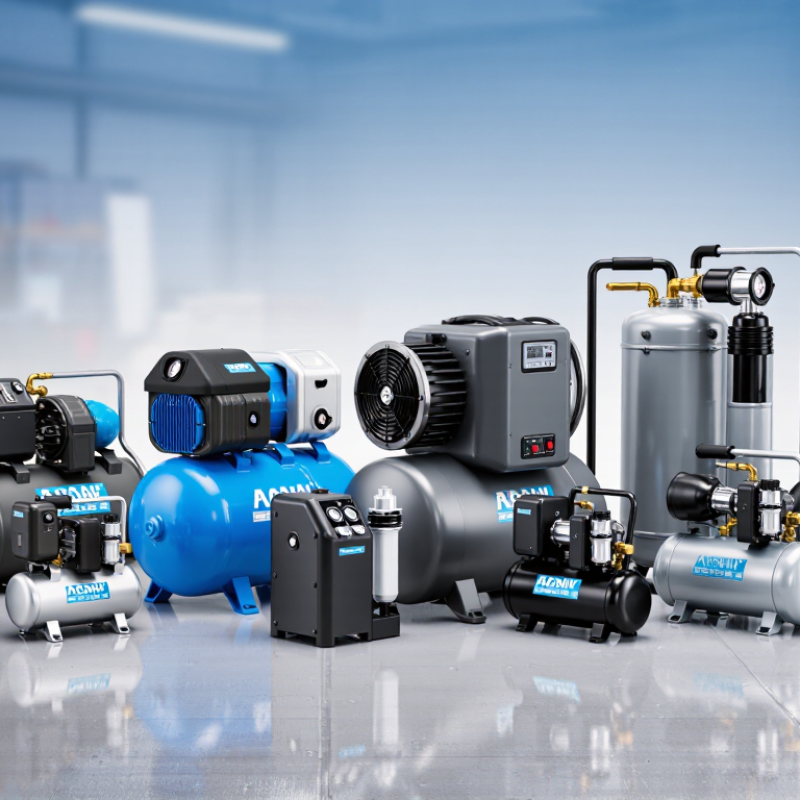
All-in-one air compressors combine the compressor element, motor, receiver, dryer, filters, controller, and safety devices in one cabinet. This design saves floor space and simplifies installation. For many workshops, 7–8 bar output supports pneumatic tools, packaging lines, cleaning systems, and light manufacturing. However, pressure alone does not define performance. Free air delivery, measured under ISO 1217 conditions, gives buyers a more reliable comparison.
In practical purchasing, check the delivered airflow at the required pressure, not only the advertised motor power. Confirm whether the unit includes a receiver tank, moisture separation, automatic drainage, and thermal protection. Voltage, frequency, ambient temperature, and service access also affect reliability. I have seen compact systems perform well in a test room, then struggle in dusty, hot workshops. That gap deserves attention.
Tips: Request the ISO 1217 test basis and the actual FAD figure. Compare noise levels at the operator’s position. Check drain maintenance and filter replacement intervals. Leave ventilation space around the cabinet. A smaller unit may look efficient, but constant operation can increase wear. A larger unit may waste energy at low demand. The best choice depends on duty cycle, air quality, peak consumption, and local service capability. Manufacturer documentation should state these limits clearly. Some specifications remain incomplete, so ask questions before approval.
| Rank | All-in-One Configuration | Rated Pressure | Typical Free Air Delivery* | Motor Range | Tank Size | Integrated Core Systems | Best-Fit Applications | ISO 1217 Consideration |
|---|---|---|---|---|---|---|---|---|
| 1 | Compact Piston Compressor with Receiver | 7–8 bar | 100–250 L/min | 0.75–2.2 kW | 24–100 L | Pump, receiver, pressure switch, safety valve, pressure gauge and basic outlet filter | Workshops, maintenance benches, light pneumatic tools and intermittent use | Confirm the declared test method; small piston units are often specified by manufacturer test data rather than a full ISO 1217 certificate. |
| 2 | Low-Noise Oil-Free Piston Package | 7–8 bar | 80–220 L/min | 0.75–2.2 kW | 24–90 L | Oil-free pump, receiver, acoustic enclosure, automatic drain and pressure controls | Dental support equipment, laboratories, small electronics and indoor service areas | Request measured flow at the stated pressure and test conditions; noise and air purity are separate performance claims. |
| 3 | Belt-Drive Piston Compressor with Dryer | 7–8 bar | 250–600 L/min | 2.2–5.5 kW | 100–270 L | Belt-driven pump, receiver, refrigerated or membrane dryer, filters, drain and controls | Automotive repair, fabrication, spray preparation and general workshop service | Use ISO 1217-based flow data where supplied; distinguish intake volume from delivered free air delivery. |
| 4 | Compact Rotary Screw Compressor with Tank | 7–8 bar | 450–1,200 L/min | 4–11 kW | 200–500 L | Oil-injected screw element, air-oil separator, receiver, controller, filters and optional dryer | Continuous workshop production, CNC machining, packaging and assembly lines | Prefer declared FAD tested in accordance with ISO 1217 at the selected working pressure. |
| 5 | Variable-Speed Rotary Screw Package | 7–8 bar | 700–2,500 L/min | 7.5–22 kW | 270–500 L | Variable-speed drive, screw element, separator, controller, receiver, dryer and filtration options | Factories with fluctuating demand, multiple shifts and energy-saving requirements | Compare ISO 1217 FAD, specific power, operating pressure and turndown range under comparable conditions. |
| 6 | Fixed-Speed Rotary Screw with Refrigerated Dryer | 7–8 bar | 1,000–4,000 L/min | 11–37 kW | 500–1,000 L | Screw compressor, air-oil separator, aftercooler, refrigerated dryer, filters and automatic drain | Stable-load manufacturing, textile equipment, general process air and workshops | Verify ISO 1217 performance at 7 or 8 bar and check whether dryer pressure drop is included in the stated outlet flow. |
| 7 | Oil-Free Scroll Compressor with Dryer | 7–8 bar | 300–1,500 L/min | 3.7–22 kW | 270–500 L | Oil-free scroll modules, receiver, aftercooler, coalescing filters, dryer and monitoring controls | Medical, laboratory, food-contact support, electronics and clean manufacturing | Confirm the exact ISO 1217 edition, test category and oil-free air-quality documentation separately. |
| 8 | Oil-Free Rotary Tooth or Screw Package | 7–8 bar | 1,000–5,000 L/min | 15–45 kW | 500–1,000 L | Oil-free compression element, intercooler, aftercooler, dryer, filtration, receiver and controller | Pharmaceutical, food processing, chemical and contamination-sensitive production | Check ISO 1217 flow data together with ISO 8573-1 air-purity requirements; the two standards address different properties. |
| 9 | Two-Stage Compressor with Large Receiver | 7–8 bar | 600–2,000 L/min | 5.5–15 kW | 500–1,000 L | Two-stage piston pump, large receiver, aftercooler, safety valve, drain and optional dryer | Heavy-duty workshops, intermittent blasting, maintenance facilities and pneumatic tools | Compare delivered flow at operating pressure rather than theoretical displacement; document testing conditions. |
| 10 | Containerized or Skid-Mounted Complete Air System | 7–8 bar | 2,000–10,000 L/min | 22–75 kW | 1,000–3,000 L | Compressor, receiver, dryer, filters, condensate management, control panel, ventilation and service connections | Remote sites, modular factories, construction support and packaged utility systems | Require a complete-system performance statement based on ISO 1217 and verify local pressure-vessel and electrical compliance. |
*Free Air Delivery (FAD) ranges are representative market ranges for complete compressor configurations and vary with pressure, ambient conditions, motor efficiency, dryer pressure drop and test method. ISO 1217 should be specified for comparable compressor performance testing; certification and compliance must be verified for the selected unit.
It combines the compressor, motor, receiver, dryer, filters, controller, and safety devices in one cabinet. Installation becomes simpler.
This pressure supports pneumatic tools, packaging equipment, cleaning systems, and light manufacturing. Actual tool requirements still matter.
ISO 1217 provides a test basis for free air delivery. Request the measured airflow at the required pressure.
No. Compare delivered airflow, pressure stability, specific power, and duty cycle. Motor size alone can mislead.
Rotary screw units usually provide steady pressure during continuous operation. Reciprocating units suit intermittent work and lower airflow.
Sometimes, but savings require verified demand patterns, pressure settings, and maintenance records. Claims need careful checking.
Check filter replacement intervals, drain access, moisture removal, and service space around the cabinet. Ten-minute service is helpful.
Compare sound levels near operators, not only in brochures. Dust, heat, hose length, and voltage can change performance.
A small receiver may cause frequent cycling during heavy demand. That increases wear. Compact is not always efficient.
No. Short tests provide useful clues, but climates and workloads vary. I would repeat testing before making a final decision.
This guide explains what buyers should look for in an All In 1 Air Compressor, including the integration of compression, air treatment, storage, and control systems in one practical package. It compares compressor technologies by energy efficiency, duty cycle, operating stability, and the potential to reduce energy consumption by 30–40% in suitable applications. The ranking framework evaluates ten models according to airflow, working pressure, noise level, service accessibility, and maintenance requirements, with particular attention to reliable 7–8 bar output and ISO 1217 performance data.
For global industrial use, the guide also examines compressed-air quality under ISO 8573-1, helping users match filtration and drying capabilities with production needs. Additional considerations include voltage compatibility, recognized certifications, warranty terms, spare-parts availability, and regional technical support. By reviewing these factors together, buyers can select an efficient, durable, and compliant all-in-one solution for workshops, manufacturing facilities, and other professional environments.

 Smart Air