7 Best Electric Air Compressors for Global Buyers

Time:2026-09-23 Author:Liam
0%

Choosing the right Electric Air Compressor is rarely about horsepower alone. Global buyers must examine airflow, working pressure, voltage, noise, duty cycle, and service access. A compact workshop model may perform well in a dry European garage, yet struggle in a hot African construction site. Conditions matter.

Ron Marshall, a respected compressed-air systems specialist and auditor, often stresses this practical point: “Measure delivered air, not marketing claims.” That advice deserves attention. Product labels can look impressive, but real output may fall under heat, altitude, long hoses, or unstable power. A reliable comparison should consider CFM or L/min at a stated pressure, not only the motor rating. Check the datasheet carefully. Small details can become expensive.

This guide reviews seven Electric Air Compressor options for global buyers. It considers portability, oil-free operation, tank capacity, thermal protection, maintenance needs, and regional electrical compatibility. It also looks at honest limitations, including slow recovery, short cables, loud operation, or weak after-sales support. No model is perfect. That is worth remembering.

Hands-on use reveals what brochures hide. A compressor may start quickly but overheat after repeated cycles. Another may run quietly but deliver insufficient air for spray tools. Buyers should verify plug standards, warranty coverage, replacement parts, and local technician availability before ordering. Independent testing is preferable when available. Still, specifications can change by market and production batch. Treat this review as a practical starting point, then confirm the final details with the manufacturer.
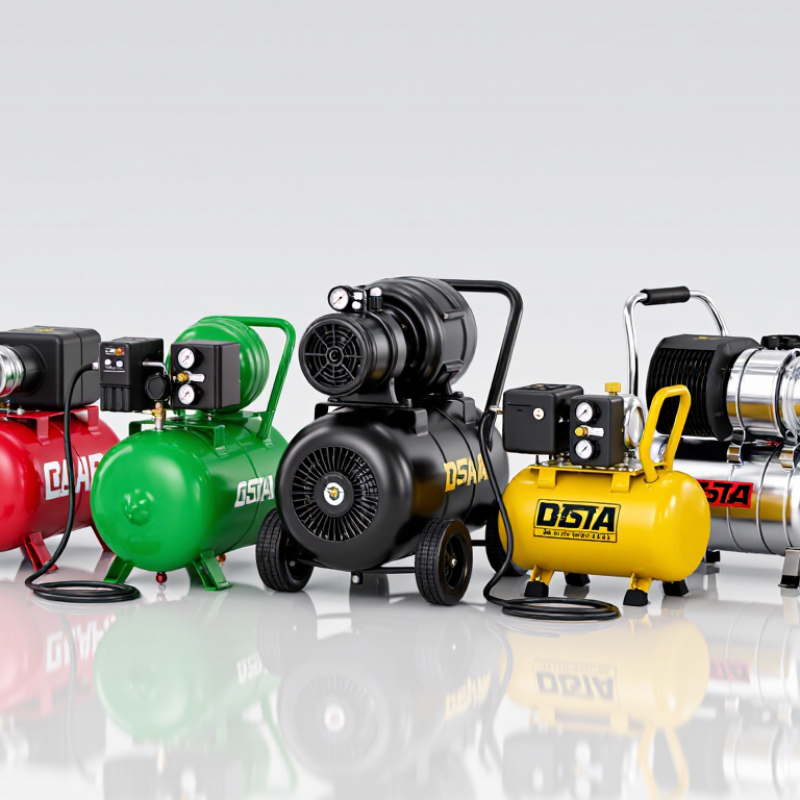
7 Best Electric Air Compressors for Global Buyers

What Makes an Electric Air Compressor Suitable for Global Buyers

A suitable electric air compressor for global buyers must perform beyond a local workshop. Voltage and frequency compatibility matter immediately. A unit designed for 220–240V may require a different configuration in another market. Buyers should also check plug standards, operating instructions, and recognized safety documentation.

Field use reveals practical details that product sheets often miss. In humid coastal areas, corrosion-resistant materials can extend service life. In dusty workshops, accessible filters make routine maintenance easier. Oil-free models suit clean applications, while oil-lubricated units may support demanding tools for longer periods. Tank size affects recovery time, but a larger tank also increases shipping weight and storage needs. No choice is perfect. I have seen buyers focus on power ratings and overlook noise, duty cycles, or local repair access.

Tips: Confirm voltage, frequency, plug type, and certification requirements before ordering. Ask for clear performance data at working pressure, not only maximum pressure. Check spare-part availability and warranty procedures in your destination country. Consider temperature, humidity, altitude, and transportation conditions. A compressor can work well in a factory but struggle in a hot, poorly ventilated room. Keep the decision practical. Test support quality before purchase by requesting manuals, maintenance intervals, and troubleshooting guidance.

7 Best Electric Air Compressors for Global Buyers

What Makes an Electric Air Compressor Suitable for Global Buyers?

This comparison uses representative, non-brand product classes commonly sold worldwide. Larger tanks generally support longer tool operation, while compact oil-free models offer easier transport and lower maintenance. Global buyers should also verify voltage, frequency, plug type, maximum pressure, duty cycle, noise level, certifications, and local after-sales support before purchasing.

Key Specifications for Comparing Electric Air Compressors

Choosing among the 7 best electric air compressors requires more than comparing motor size. Start with delivered airflow, measured as FAD, at the required pressure. A larger horsepower rating may still produce less usable air. Check performance data tested under ISO 1217 conditions, not only advertised peak output.

Pressure should match the tool or process, with a small operating margin. Most workshops need around 7–10 bar, while specialized equipment may require more. Tank volume affects how often the motor starts, but it does not replace adequate airflow. The U.S. Department of Energy’s Improving Compressed Air System Performance sourcebook reports that leaks can waste 20–30% of compressor output. Therefore, include leak testing and automatic drain performance in the comparison.

Efficiency deserves close attention. Compare specific power, usually expressed as kW per m³/min, across similar pressure ratings. Variable-speed control can reduce energy use during changing demand, although savings depend on the duty cycle. Noise level, voltage compatibility, duty rating, thermal protection, and oil-free operation also matter. A compressor rated below 70 dB(A) is easier to use near workers, but testing distance must be verified. I would not trust a perfect-looking specification sheet. Confirm warranty terms, service intervals, replacement parts, and independent test data before buying. Cost calculations should include electricity, maintenance, and downtime, not only the purchase price.

Seven Leading Electric Air Compressor Types and Their Best Uses

Electric compressors differ sharply in duty, airflow, and maintenance needs. Reciprocating piston models suit workshops, tire service, and intermittent tools. They tolerate simple operation, but their noise and pulsation can become tiring. Rotary screw compressors provide steady air for factories and packaging lines. Fixed-speed units work well under stable demand. Variable-speed models adjust motor speed when production changes, reducing wasted running time.

Scroll compressors deliver clean, quiet air for laboratories, dental rooms, and light assembly. Rotary vane compressors fit compact machinery and moderate continuous workloads. Their sliding vanes need careful lubrication and inspection. Centrifugal compressors serve large plants requiring high, stable flow. They need skilled commissioning and rarely suit small facilities. Oil-free screw compressors support food, pharmaceutical, and electronics processes where contact contamination is unacceptable. However, oil-free does not mean maintenance-free.

The U.S. Department of Energy reports that compressed air can consume 10% to 15% of industrial electricity. Its compressed-air guidance also identifies leaks as capable of wasting 20% to 30% of compressor output. These figures make receiver sizing, leak testing, and pressure control essential. ISO 11011 recommends evaluating the complete system, not only the compressor. A practical selection starts with measured demand, duty cycle, air quality, and local service access. Keep it dry. That detail matters. The cheapest unit may become expensive when filters, heat, and standby losses are ignored. Some buyers still oversize equipment “for safety,” although that decision deserves another look.

How to Choose the Right Compressor for Different Work Environments

Choosing an electric air compressor depends on the work environment, not just the advertised pressure. In a small workshop, a compact compressor with a 24–50 liter tank may handle nailers, inflating, and light cleaning. For spray painting, airflow consistency matters more than peak pressure. Check the compressor’s delivered airflow, measured at a stated pressure, rather than relying on horsepower alone.

Construction sites create different demands. Dust, long extension cables, and uneven floors can shorten equipment life. Choose a model with suitable protection, strong wheels, and a duty cycle that matches daily use. Keep the compressor away from rain and mud. A quieter unit is valuable in garages, schools, and shared workshops, where repeated noise quickly becomes tiring. It should still provide enough airflow for the tools used together.

Global buyers also need to verify voltage, frequency, plug design, and local safety certification. A compressor designed for one electrical system may perform poorly or become unsafe elsewhere. Review the manual, spare-parts availability, oil requirements, and warranty conditions before ordering. In my experience, buyers often focus on tank size and overlook service access. That was my early mistake. A slightly smaller compressor with clear maintenance points can be more reliable than a larger, awkward machine. Check operating temperature limits, startup current, and delivery costs before making the final choice.

Safety, Maintenance, Power Compatibility, and Buying Considerations

7 Best Electric Air Compressors for Global Buyers

Safety should guide every comparison. Check the pressure relief valve, tank rating, grounding, belt guard, and thermal overload protection. ISO 4414 provides safety guidance for pneumatic systems, while IEC 60204-1 addresses electrical equipment on machinery. These standards do not replace local inspection requirements. Small details matter. Keep hands away from moving parts, release pressure before servicing, and drain condensation after use. In humid workshops, a visible drain routine prevents internal corrosion.

Maintenance affects cost more than many buyers expect. The U.S. Department of Energy reports that compressed-air leaks can waste 20–30% of compressor output. Inspect hoses, couplers, seals, filters, and drains regularly. A pressure-drop test can reveal problems that sound normal. I used to overvalue tank size; that shortcut can fail. Delivered airflow at the required pressure matters more than tank volume alone. The DOE also notes that compressed-air systems may consume about 10% of industrial electricity, so efficiency deserves attention.

Power compatibility requires careful reading. Match voltage, frequency, phase, plug type, and motor current with the destination site. Do not guess. Starting current may trip a weak circuit, especially through a long extension cable. Buyers should compare rated airflow, duty cycle, noise level, oil or oil-free design, portability, spare-part access, warranty terms, and recognized safety certification. CAGI guidance supports checking performance at stated operating pressure, not only headline horsepower. For global purchasing, a local electrician should verify installation before operation.

7 Best Electric Air Compressors for Global Buyers - Safety, Maintenance, Power Compatibility, and Buying Considerations

A practical comparison of common electric compressor configurations for home, workshop, construction, automotive, and light industrial use.

Typical market specifications are shown as practical ranges because exact performance varies by motor design, ambient conditions, pressure setting, and testing standard.
Recommended Type Typical Tank Motor / Power Maximum Pressure Air Delivery
at 90 PSI
Electrical Compatibility Typical Noise Safety Essentials Maintenance Needs Best For Key Buying Consideration
Compact Oil-Free Pancake 4–6 gal (15–23 L) 1.5–2.0 hp
1,200–1,600 W
120–150 PSI
8.3–10.3 bar
2.0–4.0 CFM
57–113 L/min
100–120 V or 220–240 V
50/60 Hz; usually single-phase
70–82 dB(A) Pressure relief valve, tank gauge, regulated outlet, thermal overload protection, grounded plug Drain tank after use; inspect hose and fittings; clean intake filter; no oil change normally required Nailing, stapling, inflation, light DIY work Choose a higher CFM rating than the tool requires and verify local plug, voltage, and circuit capacity
Portable Oil-Free Hot-Dog 4–6 gal (15–23 L) 1.5–2.0 hp
1,200–1,600 W
125–150 PSI
8.6–10.3 bar
2.5–4.5 CFM
71–127 L/min
100–120 V or 220–240 V
50/60 Hz; single-phase
68–80 dB(A) Stable frame, safety valve, non-slip feet, overload reset, properly rated extension cable Drain condensation; keep ventilation openings clear; inspect couplers and power cord Mobile repairs, trim work, small spray jobs, hobby tools Check weight, handle design, recovery time, and whether the unit is approved for the destination voltage
Quiet Oil-Lubricated Workshop 15–20 gal (57–76 L) 1.5–2.5 hp
1,100–1,900 W
135–175 PSI
9.3–12.1 bar
4.0–7.0 CFM
113–198 L/min
100–120 V or 220–240 V
50/60 Hz; check starting current
60–75 dB(A) Belt and pulley guard, pressure switch, relief valve, vibration isolation, correct earthing Check oil level; change compressor oil at the manual interval; drain tank and clean filter Garages, woodworking, intermittent pneumatic tools Oil-lubricated pumps are generally durable, but oil carryover makes filtration important for painting and clean-air applications
Vertical Single-Stage Workshop 20–30 gal (76–114 L) 2.0–3.0 hp
1,500–2,300 W
135–175 PSI
9.3–12.1 bar
5.0–9.0 CFM
142–255 L/min
120 V or 220–240 V; some motors support 230 V only
50/60 Hz
70–82 dB(A) Secure floor placement, belt guard, drain valve, pressure relief valve, dedicated circuit when specified Oil and filter service; weekly condensation draining in humid environments; inspect belts and fittings General workshops, impact wrenches, sanders, blow-off work Confirm available floor space, branch-circuit amperage, and the tool’s required CFM at its working pressure
Heavy-Duty Single-Stage 30–60 gal (114–227 L) 3.0–5.0 hp
2,300–3,800 W
155–175 PSI
10.7–12.1 bar
8.0–15.0 CFM
227–425 L/min
Usually 220–240 V single-phase
50/60 Hz; dedicated circuit commonly required
75–88 dB(A) Correctly sized breaker, motor overload protection, belt guard, relief valve, anchored tank where required Regular oil changes; drain tank frequently; clean intake filter; inspect check valve and belt tension Automotive service, continuous nailing, medium-duty spray and pneumatic tools Prioritize delivered CFM and duty cycle over tank size alone; verify local electrical installation requirements
Two-Stage Industrial Receiver 60–80 gal (227–303 L) 5.0–7.5 hp
3,800–5,600 W
175–200 PSI
12.1–13.8 bar
14–22 CFM
396–623 L/min
220–240 V single-phase or 380–415 V three-phase
50/60 Hz depending on motor
78–92 dB(A) Certified receiver, pressure relief valve, isolation switch, belt guard, proper ventilation, professional installation Scheduled oil and filter service; condensate management; belt, valve, and receiver inspections Fabrication, automotive shops, high-demand air tools, intermittent production Confirm receiver certification, phase availability, installation clearance, and whether an air dryer or separator is needed
Compact High-Pressure Direct-Drive 2–3 gal (8–11 L) 1.0–2.0 hp
750–1,500 W
100–135 PSI
6.9–9.3 bar
2.0–4.0 CFM
57–113 L/min
100–120 V or 220–240 V
50/60 Hz; check motor frequency rating
65–80 dB(A) Overheat protection, pressure relief valve, secure hose connection, stable placement, correct fuse or breaker Drain moisture; clean or replace intake filter; inspect seals and electrical cable; oil-free designs need no oil change Inflation, airbrushing, portable cleaning, small pneumatic tasks Small tanks recover quickly for short tasks but are unsuitable for sustained high-CFM tools
Global Buying Checklist: Match the compressor’s delivered CFM to the tool’s requirement, confirm voltage and frequency, use the correct plug and earthing system, install a suitable regulator and moisture separator, and follow the receiver inspection rules applicable in the destination country.

FAQS

Which electric compressor suits a small workshop?

A reciprocating piston compressor often suits nailers, tire inflation, and light cleaning. A 24–50 liter tank may handle intermittent tasks. Noise and air pulsation can become tiring.

When is a rotary screw compressor a better choice?

Choose a rotary screw model for steady factory airflow or packaging equipment. Fixed-speed units suit stable demand. Variable-speed models adjust output when production changes.

Which compressor provides quiet, clean air?

Scroll compressors provide clean and quiet air for laboratories, dental rooms, and light assembly. They fit noise-sensitive environments. Keep the room dry.

When should buyers consider an oil-free compressor?

Oil-free screw compressors suit food, pharmaceutical, and electronics processes. They reduce contamination concerns during air contact. Oil-free does not mean maintenance-free.

How should buyers compare compressor performance?

Check delivered airflow at the required pressure. Do not rely on horsepower alone. Tank size matters, but airflow matters more.

What should construction-site buyers inspect?

Construction sites need protection from dust, rain, mud, and uneven floors. Select strong wheels and a suitable duty cycle. Long extension cables may reduce performance.

How can users reduce wasted energy?

Test hoses, couplers, seals, filters, and drains for leaks. Leaks may waste 20–30% of compressor output. Pressure control also reduces unnecessary energy use.

What electrical details must global buyers verify?

Match voltage, frequency, phase, plug design, and motor current with the destination site. Starting current can trip weak circuits. Do not guess.

What maintenance details are easy to overlook?

Drain condensation regularly and inspect filters, lubrication points, and safety valves. Sliding vanes need careful inspection. I once focused too much on tank size. That shortcut deserved more thought.

How should buyers judge long-term value?

Compare noise, duty cycle, operating temperature, service access, spare parts, warranty terms, and delivery costs. The cheapest unit may become expensive later. Clear maintenance points can matter more than extra capacity.

Conclusion

Choosing the right Electric Air Compressor for global use requires more than comparing power ratings. This guide explains the features that make a compressor practical across different markets, including voltage and frequency compatibility, motor efficiency, tank capacity, airflow, pressure range, portability, noise level, and duty cycle. It also outlines how to compare specifications and match compressor performance with common applications such as workshops, construction sites, maintenance tasks, manufacturing, and mobile operations.

The article reviews seven major electric compressor types and their most suitable uses, helping buyers select equipment for fixed facilities, limited workspaces, or demanding professional environments. It also covers safe operation, routine maintenance, ventilation, moisture control, electrical protection, and transportation considerations. By evaluating work conditions, available power systems, required tools, operating frequency, and long-term service needs, buyers can choose a reliable, efficient, and compatible compressor that delivers consistent performance in diverse global settings.


Liam

Liam

Liam is a dedicated marketing professional with a profound expertise in the industry, where he excels at highlighting the unique advantages of our core products. With a keen understanding of market trends and consumer needs, Liam frequently updates our company’s professional blog, providing......