Compact Air Compressors can deliver practical air power without taking over a garage shelf or vehicle trunk. In 2026, the right model depends less on its size than on the work it must handle. Inflating tires, running a brad nailer, and powering an impact wrench place very different demands on airflow and recovery. A small tank may suit short bursts, but it can struggle during repeated tool use. That trade-off is easy to miss. Specs can mislead.
This guide compares compact models by pressure, airflow, tank capacity, recovery time, noise, portability, and power source. Pay particular attention to airflow at a stated pressure, such as CFM at 90 PSI; maximum PSI alone does not show whether a compressor can sustain a tool. We also consider practical details: handle comfort, hose connections, vibration, and how easily a unit fits beneath a workbench. Manufacturer ratings are useful, but they do not always reflect the sound or pace of everyday use. No single compressor is best for every buyer. A quiet unit for indoor trim work may not be the strongest choice for roadside tire inflation. Before buying, check the tool maker’s air requirements and the compressor’s duty-cycle guidance. This comparison aims to clarify those limits, not hide them behind a ranking. Expect useful picks, clear compromises, and a few questions worth asking before you spend.
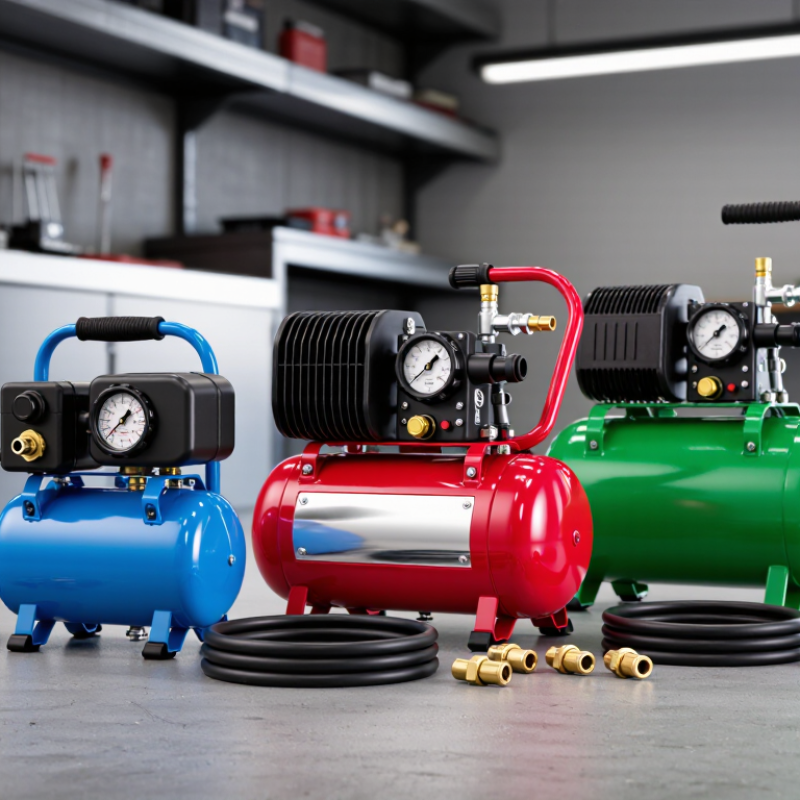
A compact air compressor converts electrical power into compressed air. Its motor drives a piston or rotary pump, drawing in room air and raising its pressure. The air collects in a small tank until the pressure switch pauses the motor. A regulator then sets the pressure delivered through the hose. Simple, but useful.
When a connected tool needs air, stored pressure pushes air through the hose and powers the tool. Compact compressors can inflate car or bicycle tires, run a small brad nailer, or supply an airbrush. They suit short jobs in garages and workshops, especially where floor space is limited. A tankless model may be lighter, but it often runs more continuously and can feel less steady during use.
Match the compressor’s airflow rating to the tool’s needs; pressure alone does not tell the whole story. Check the duty cycle too. A compressor rated for brief operation may overheat during repeated, long tasks. Noise can surprise people in a small garage. After use, release tank moisture as the manual directs, and keep the unit on a stable, dry surface. Specs help, but the right choice still depends on how often and where you work.
A motor drives a pump that compresses air into a tank; a regulator then sets the outlet pressure for the tool. The chart gives approximate airflow demand in CFM at around 90 PSI—not fixed specifications. Actual needs vary by tool and usage. When choosing a compact compressor, compare its delivered CFM at the required pressure and its duty cycle with your tool’s needs.
A compact air compressor should be judged by the work it can sustain, not by its small footprint. For nailers, inflators, or airbrushes, check the required airflow and pressure in each tool’s manual. Compare compressor airflow ratings at the same pressure; a higher CFM number at a lower PSI may not tell you much. Numbers can mislead.
Tank capacity affects how often the motor cycles, but it cannot make a low-output compressor deliver air indefinitely. Check the duty cycle, which indicates how long the unit can run before it needs to cool. Recovery time matters too: a compressor that takes several minutes to rebuild pressure can interrupt repeated tasks. If specifications omit these details, treat that as a limitation, not a minor footnote.
Noise, weight, and power requirements shape daily use. A unit rated at 70 decibels may feel very different in a small garage than outdoors, so note how and where noise was measured when that information is available. Check the outlet requirements and whether the handle, cord, and hose reach your work area. A lightweight model is easier to carry, but a short hose can still make setup awkward. Published figures cannot fully predict your setup. Test against your actual tools and workload before choosing.
Compact compressors trade size, weight, airflow, and run time in different ways. Pancake models use a broad, flat tank that sits steadily on a garage floor. They suit trim nailers and quick inflation jobs, but their small tanks can mean frequent motor restarts. Twin-stack designs place two narrow tanks together, often offering more stored air without a much wider footprint. A horizontal “hot dog” tank is easy to carry and store under a bench. Shape matters, but it does not tell the whole story.
Oil-free, direct-drive models are common in portable sizes. They need less routine lubrication, though they can sound sharp in a small room. Oil-lubricated units may run more smoothly, but add maintenance and weight. Cordless compressors skip the power cord and work well for brief tasks away from an outlet. Their sustained airflow and battery runtime can be limiting. Convenient, not limitless.
Compare airflow at the pressure your tool needs, not just tank capacity or peak pressure. A framing nailer used continuously needs more recovery than a tire inflator used for a minute. Check the stated CFM at a relevant PSI, then consider duty cycle and noise. I’ve seen compact units chosen for their small footprint, only to struggle during repeated tool use. That distinction is easy to miss.
Best Compact Air Compressors in 2026 by Use Case
The right compact compressor depends on the task, not just its size. For roadside tire top-ups, look for a portable unit with a clear pressure gauge, a long power cord, and enough airflow for your vehicle’s tires. Check the vehicle manual for the correct pressure. Small matters.
For trim nailers and light home repairs, choose a model whose airflow meets the tool’s stated CFM requirement at its working pressure. A small tank can handle brief bursts, but frequent firing may leave you waiting for pressure to recover. For airbrushing, prioritize steady output and add a regulator and moisture filter; water droplets can spoil a fine finish. Tank size alone is an easy shortcut, but it can mislead. Noise and duty-cycle limits matter too, especially in a small workshop.
Tips: Compare the compressor’s delivered CFM at your tool’s required PSI, not just its maximum PSI. Check hose fittings before buying, and leave room for recovery time. If you plan to run a tool continuously, a compact unit may feel underpowered, even when its headline numbers look reassuring.
A compact compressor is only useful when its airflow matches the tool. Check the required CFM at the stated pressure, not just the maximum PSI. A small nailer may need little airflow, while an impact wrench can demand more. Tank size affects how often the motor cycles. Also consider weight, noise, and the compressor’s duty cycle. The lightest model is not always the easiest to live with.
Set the compressor on a level, ventilated surface and keep its intake clear. Use a hose and fittings rated for the working pressure. Start with the regulator low, then adjust it to the tool’s requirements. Wear hearing protection if the motor is loud. After use, switch off and unplug the unit, release stored pressure as directed, and drain moisture from the tank. Water left inside can encourage corrosion. I used to treat draining as an optional chore; it is easy to forget, and that is exactly why a routine helps.
Tips: Check the air filter regularly and clean or replace it according to the manual. Listen for new rattles or frequent cycling. Small changes matter. If pressure drops unexpectedly, inspect connections for leaks with soapy water, then tighten or replace faulty fittings. Never open a pressurized tank. Follow the manufacturer’s maintenance schedule.
Their broad, flat tanks sit steadily on garage floors. They work well for trim nailers and quick tire inflation, but may restart often.
Twin-stack models use two narrow tanks to store more air without much extra width. Horizontal hot-dog tanks are easy to carry and slide under a bench.
No. Check airflow, measured in CFM, at the pressure your tool requires. Tank size mainly affects how often the motor cycles.
A continuously used framing nailer needs more recovery than a tire inflator used briefly. An impact wrench may also demand substantial airflow.
Oil-free models need less routine lubrication but can sound sharp indoors. Oil-lubricated units may run more smoothly, though they add weight and maintenance.
It suits brief tasks away from an outlet, such as topping up a tire. Its sustained airflow and battery runtime can be limited. Convenient, not limitless.
Place it on a level, ventilated surface with its intake clear. Use pressure-rated fittings, start with a low regulator setting, then adjust for the tool.
Switch it off, unplug it, and release stored pressure as directed. Drain tank moisture to help prevent corrosion. I still forget sometimes.
Check the air filter and listen for new rattles or frequent cycling. If pressure drops, inspect fittings with soapy water; replace faulty ones.
Compact Air Compressors provide portable, space-saving power for tasks ranging from inflating tires and sports equipment to running select air tools and completing small painting or repair jobs. This guide explains how these machines draw in, pressurize, and store air, and where their compact size is most useful. It also highlights the specifications worth comparing, including tank capacity, airflow, pressure, motor power, noise level, weight, and duty cycle, so readers can match performance to the work they need to do.
Different compressor designs offer distinct advantages in portability, operating noise, and sustained output. Rather than naming one universal winner, the guide compares suitable options by use case, such as occasional household tasks, workshop projects, or travel needs. It also offers practical advice for choosing a model, using it safely and effectively, and maintaining it through routine checks, proper storage, and care of filters and hoses. These considerations help readers select a compressor that fits both their workspace and their workload.

Smart Air