7 Best Air Compressors With Tank for 2026

Time:2026-09-28 Author:Sienna
0%

Choosing the right Air Compressor With Tank can change how smoothly a workshop operates. A suitable model powers nailers, inflates tires, sprays finishes, and handles short bursts of pneumatic work without constant cycling. Yet tank size alone does not determine performance. Motor strength, delivered air, recovery time, noise, portability, and maintenance demands matter just as much.

This guide to the 7 Best Air Compressors With Tank for 2026 examines those practical details. Each selection is considered for real workshop conditions, including limited garage space, uneven floors, cold starts, and tools that demand steady airflow. We also look at tank capacity, maximum pressure, oil-free or oil-lubricated designs, and accessible drain valves. Small details matter.

Experience often exposes weaknesses that product pages overlook. A compressor may advertise impressive peak pressure but struggle with a continuous-duty tool. Another may run quietly yet recover slowly during repeated fastening. These differences can affect productivity, comfort, and long-term value. Ratings can help, but they are not absolute.

No single compressor suits every user. That is worth admitting. A homeowner may prefer a compact unit, while a fabricator needs stronger airflow and a larger reserve. Noise tolerance, electrical supply, budget, and available storage should shape the final decision. We use these practical factors, along with manufacturer specifications and sensible safety expectations, to compare the leading options for 2026. Always verify the manual before operation, especially when connecting unfamiliar tools or extension cords.
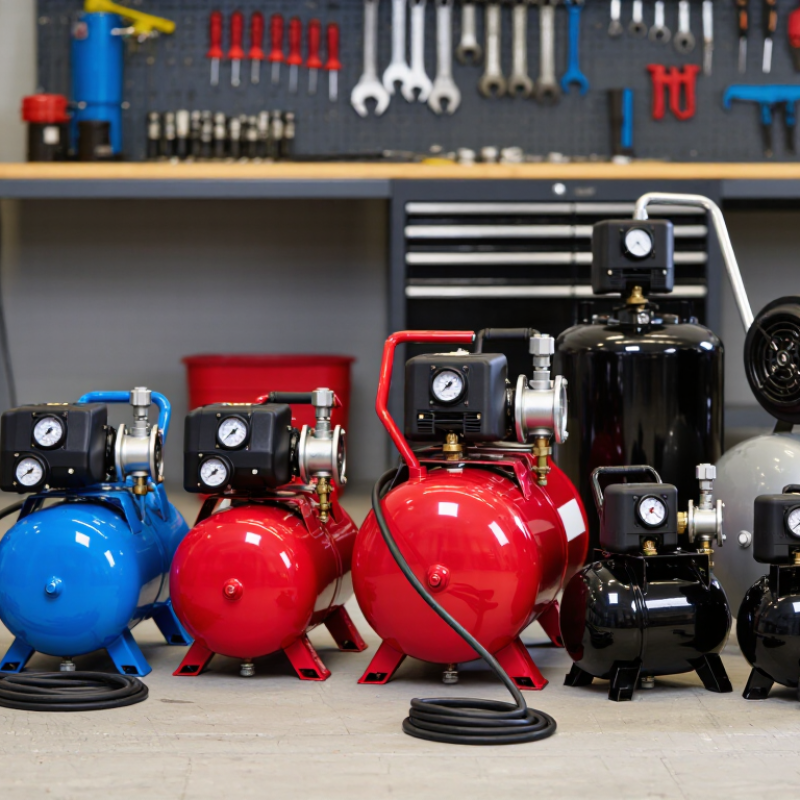
7 Best Air Compressors With Tank for 2026

What to Consider When Choosing an Air Compressor With a Tank

Choosing an air compressor with a tank starts with the tools you plan to run. Check each tool’s required airflow, measured in CFM, at its stated pressure, measured in PSI. For tools used together, add their airflow needs and allow a practical margin. A large tank can provide a short burst, but it cannot make an undersized pump keep up. That distinction is easy to miss.

Tank size affects how often the motor starts and how long stored air lasts between cycles. For intermittent inflation or trim work, a modest tank may be adequate. Sanding or other sustained tasks demand attention to the compressor’s delivered CFM and duty cycle, not just tank gallons. The U.S. Department of Energy’s Improving Compressed Air System Performance sourcebook estimates that compressed air uses about 10% of industrial electricity. That figure concerns industrial systems, not every home workshop, but it underscores why efficiency and proper sizing matter.

Compare airflow ratings at the same pressure, and look for independently standardized performance information where available. The Compressed Air and Gas Institute’s performance-verification resources can help buyers interpret compressor ratings. Also check outlet voltage, breaker requirements, noise ratings, and whether the tank has an accessible drain. A bigger tank feels reassuring. Still, it will not solve low airflow, and it may add weight and take up valuable floor space.

7 Best Air Compressors With Tank for 2026 — What to Consider When Choosing an Air Compressor With a Tank
Compressor Type Typical Tank Size Typical Delivered Airflow at 90 PSI Best Suited For Key Advantages What to Check Before Buying
1. Compact trim compressor 1–2 gal About 0.5–2.0 CFM Inflation, brad nailers, and occasional finish-nailing jobs Small footprint, easy to carry, and quick to store Small tanks recover frequently and are not suited to tools that need continuous airflow.
2. Pancake compressor 4–6 gal About 2–3 CFM Home repairs, inflation, and intermittent use of finish nailers Portable design with more stored air than compact trim models Confirm the tool’s required CFM at its working pressure; tank size alone does not indicate sustained output.
3. Portable wheelbarrow or twin-tank compressor 8–10 gal total About 3–5 CFM Job-site nailing, framing work, and general portable use Wheels or a balanced frame make it easier to move than a stationary unit Check loaded weight, noise rating, outlet configuration, and whether the unit fits the available power supply.
4. Mid-size vertical compressor 20–30 gal About 4–8 CFM Home workshops, intermittent impact-wrench use, and small air tools Vertical tanks save floor space and provide a useful reserve for short bursts Compare delivered CFM at the pressure your tool requires, and allow room for drainage and ventilation.
5. 30-gal shop compressor Approximately 30 gal About 5–10 CFM Frequent workshop tasks and selected air tools used intermittently Greater reserve capacity can reduce how often the motor cycles during burst-use tasks Some higher-output models require a dedicated circuit; verify voltage, amperage, and the manufacturer’s installation instructions.
6. 60-gal single-stage stationary compressor Approximately 60 gal About 9–14 CFM Regular shop use, including tools with moderate continuous-air demand Suitable for longer work sessions when paired with adequate delivered airflow Check the duty cycle, pump speed, electrical requirements, noise, and whether the workspace supports a stationary installation.
7. 80-gal two-stage stationary compressor Approximately 80 gal About 15–25 CFM Higher-demand shop applications and multiple air-consuming tasks Large tank and higher output can support sustained use when correctly sized for the tools Often needs substantial electrical capacity and permanent space. Confirm the required circuit, working pressure, and service access.
Buying tip: Airflow figures are approximate ranges for common configurations, not guaranteed specifications for every compressor in a category. Compare each tool’s required CFM at its stated operating pressure with the compressor’s delivered CFM at the same pressure. Tank capacity stores compressed air; it does not replace adequate continuous airflow.

How Tank Size, Pressure, and Airflow Affect Compressor Performance

Tank size, pressure, and airflow describe different parts of compressor performance. The tank stores compressed air and can smooth short demand spikes, such as a nailer firing repeatedly. It does not create more airflow. A small tank may refill often; an oversized tank can still disappoint if the pump cannot keep pace. That distinction matters.

Pressure is the force available at the tool, but airflow determines how long it can operate. Check the tool’s required CFM at its stated PSI, then compare it with the compressor’s delivered airflow at that pressure. CAGI’s Performance Verification Program publishes standardized compressor data sheets with capacity figures at specified operating conditions. Those are more useful than horsepower alone.

The U.S. Department of Energy’s Improving Compressed Air System Performance handbook reports that compressed-air systems use about 10% of the electricity consumed by U.S. manufacturers. That industrial figure is not a home-shop estimate, but it shows why efficiency matters.

A practical detail: long, narrow hoses and restrictive fittings can reduce pressure at the tool. I would not treat tank volume as a score; that shortcut can mislead. Real setups are messier. Allow some airflow headroom, and check performance at the tool, not just at the tank gauge.

The 7 Best Air Compressors With Tanks for 2026

The 7 Best Air Compressors With Tanks for 2026 should be judged by the work they can sustain, not tank size alone. A 6-gallon tank may suit brief nail-gun bursts, while spray painting or repeated impact-wrench use calls for stronger airflow and recovery. Check delivered air in cubic feet per minute at the tool’s required pressure. Horsepower by itself is a weak comparison.

The U.S. Department of Energy’s Improving Compressed Air System Performance sourcebook reports that leaks can waste 20–30% of compressor output. That figure concerns the whole air system, not a particular compressor, but it shows why matching capacity matters. An oversized unit will not fix leaky hoses or restrictive fittings. Small details count.

For a useful seven-unit shortlist, compare portable oil-free designs, quieter workshop models, and higher-output belt-driven units. Check tank capacity, rated pressure, duty cycle, noise, and recovery time. The Compressed Air and Gas Institute’s performance-verification resources point buyers toward standardized compressor data, including testing under ISO 1217. Compare verified airflow and power consumption where available. A bigger tank can delay cycling, but it cannot create more air over time. I would still inspect the specification sheet twice; ratings can be easy to misread. Pulling a hose across a crowded garage is a practical test, too.

Comparing Power Sources, Portability, Noise, and Maintenance Needs

Choosing a tank compressor starts with the tools, not the largest tank. Check each tool’s pressure and air-use requirements, then compare them with the compressor’s delivered airflow. A tank stores air, but it cannot make an undersized pump keep up. Electric models work well where outlets are reliable; cordless units are easier to move but have limited runtime. Gas-powered options suit some outdoor jobs, though fuel, exhaust, and added servicing deserve consideration. That trade-off is easy to overlook.

Tips: Match the compressor to your most demanding tool. Leave a little capacity for real-world use, and check the outlet or battery setup before buying.

Portability is more than weight. A compact unit with a handle may still be awkward on stairs, while larger wheels can roll over a rough driveway. Noise matters too, especially in enclosed garages; compare published sound ratings and consider where the machine will run. Maintenance is simple but not optional: drain tank moisture after use, inspect the intake filter, and follow the manual’s service intervals. I’ve found that skipped draining becomes a habit quickly—and then the tank’s condition is harder to judge. Keep the manual nearby.

7 Best Air Compressors With Tank for 2026

Comparing power sources, portability, noise, and maintenance needs

How to read this comparison: Noise figures are approximate category-level examples, not specifications for individual products. Actual sound levels vary by model, workload, and measurement distance. Check manufacturer specifications before buying.

Compressor type Typical power source Portability Typical noise Routine maintenance
Battery-powered, small tankRechargeable batteryVery high; easy to carry65 dBADrain tank; clean or replace intake filter as needed
Compact, 1-gallon tank120V household outletVery high; typically lightweight68 dBADrain tank; check filter and fittings
Pancake, 6-gallon tank120V household outletHigh; portable with handle78 dBADrain tank; inspect filter and hose connections
Twin-stack, 4–6-gallon tank120V household outletModerate to high; compact but heavier75 dBAFor oil-lubricated models, check and change oil; drain tank
Vertical, 20-gallon tank120V household outletLow; often wheeled but bulky80 dBAOil-free models still need tank draining and filter checks
Stationary, 30-gallon tankOften 240V; check installation requirementsLow; intended for a fixed workspace78 dBACheck and change oil when applicable; drain tank and inspect belts
Gas-powered, wheelbarrow-style tankGasoline engineJobsite portable; heavy, usually wheeled85 dBAEngine oil, air filter, and spark plug service; drain tank

Smaller electric units are generally easier to move, while larger tanks can support longer bursts of air but take up more space. Gas-powered models can operate without an electrical outlet, but require engine upkeep and are typically louder.

How to Select the Right Tank Compressor for Your Tools and Projects

Choose a tank compressor by matching its delivered airflow to your tools, not by tank size alone. Check the tool’s required SCFM at its stated PSI, then allow extra capacity if several tools may run together. CAGI performance data sheets use standardized ISO 1217 testing, making rated airflow figures more useful for comparison than horsepower claims alone. A framing nailer needs brief bursts; a spray gun may demand steady airflow. Different jobs, different compressor needs.

The tank stores air for short peaks, but it cannot make an undersized pump deliver more air continuously. Compare pump output, tank capacity, and recovery time. The U.S. Department of Energy’s Compressed Air Sourcebook reports that leaks can waste 20–30% of compressor output in industrial systems. That figure is not a home-shop forecast, but it shows why fittings and drain maintenance matter. I might still choose a quieter, smaller unit for a garage—even if recovery feels slow.

Tips List each tool’s SCFM and PSI, then identify which tools run simultaneously. Check the compressor’s rated airflow at your working pressure. Confirm the outlet, circuit, noise level, and drain access fit your space. A big tank looks reassuring. It may not solve low airflow.

FAQS

How do I choose a tank compressor for my tools?

Check each tool’s required airflow and pressure. Add airflow needs for tools used together, then leave a practical margin. Don’t rely on horsepower alone.

Does a larger tank provide more continuous airflow?

No. A tank stores air for short bursts, but the pump determines how much air the compressor can deliver over time. Bigger tank, not necessarily better.

What size tank works for brief tasks?

A modest tank may suit occasional inflation or short nail-gun bursts. For trim work, consider recovery time and how often the motor starts.

What should I check for sanding or spray painting?

These tasks can need sustained airflow. Compare delivered CFM or SCFM at the required pressure, and check the duty cycle. Tank gallons aren’t enough.

How should I compare airflow ratings?

Compare ratings at the same pressure. Standardized performance data can make airflow figures easier to assess. I’d still read the specification sheet twice.

What details matter in a garage or workshop?

Check outlet voltage, breaker requirements, noise level, and drain access. A heavy compressor can be awkward on a crowded floor.

Can a big tank fix low airflow or slow recovery?

No. It may delay motor cycling, but it cannot increase the pump’s ongoing output. A larger tank may simply take up more space.

Do hoses and fittings affect compressor performance?

Yes. Leaks and restrictive fittings can reduce usable air. Check connections and drain the tank as recommended. I sometimes overlook the hose until a tool feels weak.

Conclusion

Choosing the right Air Compressor With Tank begins with matching its capacity to the tools and projects you plan to use. Tank size affects how long stored air can support a task before the motor needs to refill it, while pressure and airflow determine whether a compressor can meet a tool’s operating requirements. Considering all three specifications together helps prevent choosing a unit that struggles during demanding or continuous work.

This guide compares seven tank compressors for 2026 and explains the practical differences among power sources, portability, operating noise, and maintenance needs. From occasional home projects to more frequent workshop tasks, the best choice depends on balancing performance with available space, mobility, and upkeep. Use your tools’ air requirements and your expected workload as a starting point, then select a compressor that offers suitable pressure and airflow without adding unnecessary size or complexity.


Sienna

Sienna

Sienna is a skilled marketing professional with a deep expertise in our company’s core products and services. With a passion for innovation and detail, she plays a pivotal role in crafting insightful blog posts that not only highlight the unique features of our offerings but also provide valuable......