2026 Best Air Compressor for Industry Applications

Time:2026-10-03 Author:Mason
0%

Choosing the 2026 Best Air Compressor for Industry Applications requires more than comparing horsepower, tank size, or purchase price. A compressor beside a CNC line faces different demands from one feeding a food-processing plant. Pressure stability, air quality, duty cycle, energy use, maintenance access, and operating temperature all affect performance. Small errors become expensive quickly.

Ron Marshall, an industrial compressed-air specialist and auditor, has warned, “Compressed air is often the most expensive utility in a plant.” That observation remains practical in 2026. A poorly selected unit may run continuously, create excess heat, and waste energy through leaks. An oil-free compressor may suit sensitive production, while an oil-injected rotary screw model may better serve heavy manufacturing. The correct answer depends on real operating data.

This guide examines each choice through an industry-focused lens. It considers flow requirements, pressure variation, filtration, controls, noise, service intervals, and lifecycle cost. Actual plant conditions matter. A clean showroom specification can mislead. So can a low initial price.

We also acknowledge an uncomfortable point: many compressor upgrades fail because demand was estimated casually. Production peaks are missed. Future expansion is ignored. Maintenance routines remain unclear. These weaknesses deserve attention, not polished marketing language. Our recommendations therefore emphasize measurable performance, documented testing, and dependable technical support. The goal is not simply to identify a powerful machine. It is to identify an Air Compressor For Industry that delivers stable air, controlled costs, and reliable production under demanding conditions.
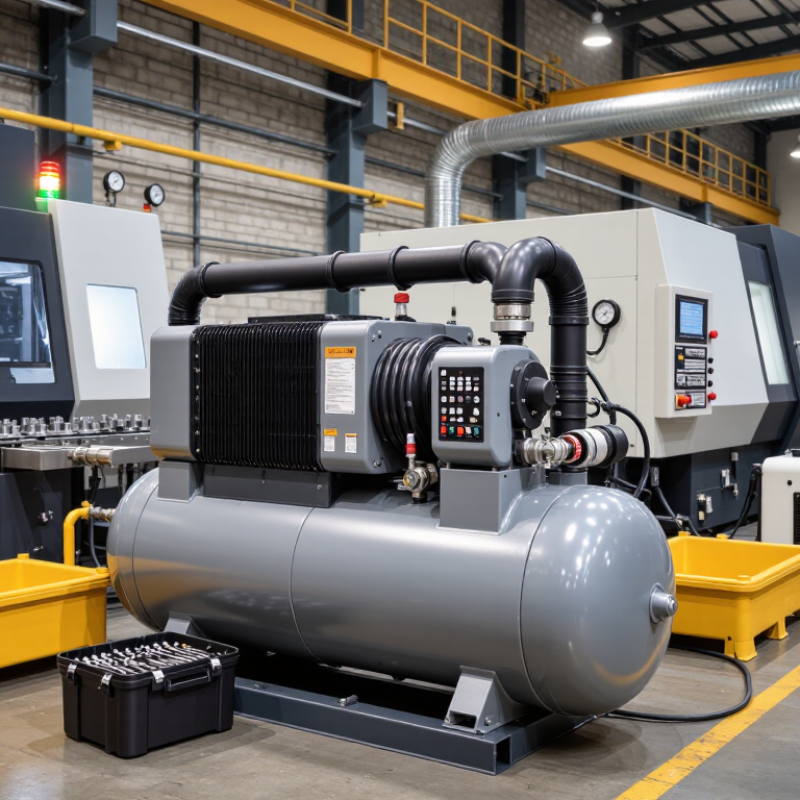
2026 Best Air Compressor for Industry Applications

Industry Air Compressors: Types, Principles, and Core Components

Choosing the best air compressor for industry begins with the process, not the catalog. An industrial compressor converts mechanical power into stored pneumatic energy. A motor drives a compression element, raising air pressure and temperature.

Reciprocating compressors suit intermittent, high-pressure demand. Rotary screw units provide steady flow for production lines.

Centrifugal machines work well in large facilities with stable, high-volume demand. Oil-free designs protect sensitive processes, while oil-injected models often support efficient continuous operation.

The right type depends on duty cycle, pressure, flow, air quality, and installation space.

The core components deserve equal attention. Air enters through an intake filter, then passes into the compression chamber. After compression, an aftercooler removes heat and moisture. In oil-injected systems, a separator reduces oil carryover.

A receiver tank balances demand and limits rapid cycling. Dryers, drains, regulators, and filters prepare air for tools or process equipment. Controllers manage loading, unloading, and alarms. Safety valves and pressure switches must be correctly rated and tested.

I have seen neglected drains create water in a downstream hose.

Selection also requires field judgment. Measure actual demand during shifts, including leaks and peak starts. A compressor sized only for average flow may struggle every morning.

Oversizing is not harmless; it can increase purchase and operating costs. No design is perfect.

Recheck pressure losses, ventilation, noise, and maintenance access before approval.

I would also verify service records, separator condition, belt tension, and filter pressure drop during routine inspections. Small readings often reveal larger problems.

Key Performance Factors for Selecting a 2026 Industrial Air Compressor

2026 Best Air Compressor for Industry Applications

Selecting a 2026 industrial air compressor starts with measured demand, not catalogue horsepower. The U.S. Department of Energy reports that compressed air can consume about 10% of industrial electricity. Its system sourcebook also estimates that leaks may waste 20–30% of compressor capacity. These figures make efficiency a financial decision, not a technical decoration.

Compare free air delivery at the required pressure, rather than motor size alone. Check specific power, expressed as kilowatts per 100 cubic feet per minute. A variable-speed compressor can reduce unloaded running during shifting production, but it may perform poorly if demand stays constant. Confirm duty cycle, starting frequency, ambient temperature, and available cooling space. ISO 8573-1 guidance also makes air quality important. Moisture, particles, and oil can damage valves, instruments, and finished products. The correct dryer and filtration stages must match the process.

Tips: Log pressure and flow for one week. Inspect leaks with ultrasonic equipment. Test at the farthest outlet. A 7-bar reading near the compressor may hide a weak 5.8-bar supply at the machine. Controls should stage compressors without creating pressure swings. Heat recovery deserves attention too; DOE guidance notes that much compressor input energy becomes heat. Still, a payback spreadsheet can mislead when maintenance labor, filter replacement, and downtime are ignored. Leave room for uncertainty. A slightly oversized system may waste energy, while no reserve capacity can stop production during service.

2026 Best Air Compressor for Industry Applications

Key performance factor: typical operating pressure ranges by compressor technology. Select a compressor whose normal working pressure matches the process requirement while preserving sufficient capacity for peak demand.

Typical ranges shown are representative engineering values for industrial systems. Actual performance depends on compressor configuration, cooling method, altitude, air quality requirements, and operating conditions.

Comparing Compressor Technologies for Different Industrial Applications

2026 Best Air Compressor for Industry Applications

Comparing Compressor Technologies for Different Industrial Applications

Selecting the best compressor depends on air demand, pressure stability, contamination limits, and operating hours. A technology that performs well in a workshop may waste energy in a continuous-process plant.

Oil-injected rotary screw compressors suit factories needing steady air throughout long shifts. They provide stable flow for pneumatic tools, packaging lines, and assembly equipment. Their compact design also saves valuable floor space. However, oil separation systems need regular inspection. Small maintenance delays can affect air quality and increase operating costs.

Oil-free screw compressors are better for pharmaceutical, electronics, and food-processing environments. They reduce contamination risks near sensitive products. Reciprocating compressors fit intermittent duty, such as repair bays or small production cells. They tolerate changing demand, but vibration and noise require careful placement. Centrifugal compressors serve large facilities with constant, high-volume demand. They are efficient at scale, yet poor control settings can create expensive energy losses.

In real plant assessments, receiver size often changes the recommendation. A compressor may appear powerful on paper. The system can still struggle during sudden air demand. I have seen pressure drops caused by undersized piping, not weak compressors. That detail is easy to miss. Engineers should compare lifecycle cost, maintenance access, dryer compatibility, and actual load profiles before choosing equipment. No selection is perfect. Conditions change.

Installation, Maintenance, Safety, and Energy Efficiency Requirements

2026 Best Air Compressor for Industry Applications

Installation begins with demand, not catalog horsepower. Calculate flow in FAD, peak pressure, duty cycle, and future expansion. A receiver near intermittent tools can reduce pressure swings and unnecessary starts. Keep the compressor room cool, dry, and ventilated. Leave service clearance around filters, belts, and drains. Small layout errors become expensive later.

Safety needs physical controls. Install correctly rated relief valves, isolation points, pressure gauges, and automatic condensate management. Follow the machine manual, ISO 12100 risk principles, and applicable workplace rules. Lockout and depressurize before servicing. Never use compressed air to clean clothing or skin. It looks harmless. It is not.

Maintenance should combine operating records with inspection. Check inlet filters, oil condition, separator pressure drop, leaks, and drain performance. The U.S. Department of Energy reports that compressed-air leaks can waste 20–30% of compressor output. Its Improving Compressed Air System Performance guide also identifies compressed air as a major industrial electricity load. Use ultrasonic surveys and repair the largest leaks first. ISO 11011 recommends measuring system energy performance rather than guessing. Efficient control may include variable-speed regulation, pressure-band optimization, and heat recovery. However, variable speed is not automatically efficient under every load profile. That assumption deserves review. Record kWh per unit of production monthly; otherwise, promised savings remain difficult to verify.

2026 Best Air Compressor for Industry Applications - Installation, Maintenance, Safety, and Energy Efficiency Requirements
Compressor Type Typical Industrial Application Typical Pressure Range Typical Capacity Range Installation Requirements Maintenance Requirements Key Safety Requirements Energy-Efficiency Measures Best-Fit Assessment
Oil-Injected Rotary Screw General plant air, assembly lines, fabrication, packaging, and continuous manufacturing. 5–15 bar(g) for common industrial systems; higher-pressure configurations are available. Approximately 0.7–65 m³/min, depending on frame size and operating pressure. Install on a level foundation with adequate ventilation, service clearance, condensate drainage, and correctly sized inlet and discharge piping. Replace air and oil filters at specified intervals; inspect separator elements, belts or couplings, oil condition, coolers, valves, and condensate drains. Provide pressure relief protection, emergency isolation, guarding, lockout/tagout, and safe handling procedures for hot oil and compressed air. VSD recommended
Use variable-speed control for variable demand, reduce leakage, minimize artificial pressure, and recover usable heat where practical.
Best general-purpose choice for medium-to-large continuous-duty plants.
Oil-Free Rotary Screw Food and beverage, pharmaceutical, electronics, medical products, and processes requiring low oil contamination risk. 5–13 bar(g) for many standard industrial configurations. Approximately 1–50 m³/min, subject to pressure, cooling method, and design. Use clean, dry intake air; provide effective cooling, drainage, vibration control, and filtration appropriate to the process risk. Inspect air-end components, coatings, coolers, filters, condensate management systems, and control instrumentation according to the service schedule. Verify air-quality requirements against ISO 8573-1; do not assume “oil-free” eliminates the need for downstream filtration or hygienic controls. Apply VSD where demand fluctuates, maintain coolers, prevent pressure drops, and use heat recovery when the operating profile supports it. Best when air purity is more important than the lowest initial cost.
Reciprocating Piston Intermittent workshop use, high-pressure applications, small production cells, maintenance shops, and backup service. Approximately 1–30 bar(g); multistage designs support higher pressures. Approximately 0.05–10 m³/min, commonly suited to lower flow requirements. Use a rigid, level base; allow vibration clearance, ventilation, receiver access, and suitable piping with flexible connections where required. Check oil level, piston rings, valves, belts, cylinder heads, receiver drains, pressure switches, and vibration or abnormal noise. Install an approved receiver with a pressure relief valve and drain; never bypass guards, safety valves, or automatic shutdown devices. Use an appropriately sized receiver, avoid excessive unloaded running, repair leaks, and select automatic sequencing for multiple units. Best for intermittent duty, high pressure, and relatively low air demand.
Centrifugal Large continuous processes such as metals, chemicals, refining, utilities, and high-volume manufacturing. Approximately 3–40 bar(g), depending on the number of stages and system design. Typically above 50 m³/min; suitable for very large and stable air demand. Requires engineered foundations, clean inlet air, cooling-water or air-cooling provisions, precise alignment, low-restriction piping, and professional commissioning. Monitor vibration, bearing condition, inlet guide vanes, intercoolers, surge controls, filters, and operating trends; use condition-based maintenance. Protect against surge, overspeed, high temperature, vibration, and excessive discharge pressure; use a documented control and trip strategy. Operate close to the design point, sequence units efficiently, maintain inlet conditions, minimize pressure drop, and use heat recovery where feasible. Best for high-flow, steady-duty systems with strong technical support.
Scroll Low-noise applications, laboratories, dental and medical equipment, electronics, and small clean-air systems. Approximately 5–10 bar(g) for common industrial models. Approximately 0.1–2.5 m³/min per module; modules can be combined for higher demand. Install in a clean, dry, well-ventilated location with adequate clearance and protection from dust, water, and excessive ambient heat. Inspect intake filters, cooling paths, drains, check valves, electrical connections, and scroll-module operating hours. Use receiver pressure protection, electrical isolation, guarding, and safe procedures for stored energy before service. Use modular sequencing, avoid oversizing, maintain clean filters, and match the number of running modules to actual demand. Best for clean, quiet, low-to-medium flow applications.
Variable-Speed Drive Compressor Facilities with fluctuating production schedules, multiple shifts, changing process loads, and frequent demand variation. Usually 5–15 bar(g), depending on the compressor package and control settings. Broad range; actual output varies continuously with speed, pressure, and compressor design. Provide suitable electrical capacity, harmonic assessment where necessary, ventilation, EMC-compliant installation, and correct motor-cooling conditions. Maintain the compressor as specified and inspect drive cooling fans, electrical terminals, filters, sensors, software alarms, and motor condition. Apply electrical lockout/tagout and allow the DC bus to discharge before servicing; follow the drive manufacturer’s waiting period. Set a stable pressure band, avoid excessive minimum speed operation, control leakage, and verify savings using measured kWh and delivered air. Best for variable demand when correctly sized and commissioned.
High-Pressure Booster PET bottle production, pressure testing, instrumentation, specialty manufacturing, and high-pressure process air. Commonly 20–40 bar(g) or higher, depending on the booster design and application. Usually lower flow than standard plant-air compressors; commonly below 10 m³/min. Use high-pressure-rated piping, fittings, receivers, valves, filtration, cooling, and pressure-control equipment designed for the maximum working pressure. Inspect cylinders, valves, interstage coolers, lubrication systems, relief devices, seals, drains, and pressure instrumentation. All components must be rated for the maximum pressure; use staged relief protection, guarding, inspection, and controlled venting. Generate high pressure only where required, isolate unused branches, reduce leakage, and use a dedicated booster instead of raising the entire plant pressure. Best for localized high-pressure demand rather than whole-plant distribution.
Engineering note: Pressure and capacity values are typical planning ranges, not guaranteed ratings. Final selection should be based on measured flow demand, required pressure at the point of use, air-quality classification under ISO 8573-1, compressor performance data under ISO 1217 or an equivalent test method, ambient conditions, duty cycle, lifecycle cost, and applicable local electrical and pressure-vessel regulations.

Leading 2026 Air Compressor Features, Evaluation Criteria, and Use Cases

2026 Best Air Compressor for Industry Applications

In 2026, the best industrial air compressor starts with the real duty cycle, not advertised horsepower. Measure required airflow, operating pressure, ambient temperature, and daily run hours. A packaging line may need clean, steady air, while a workshop may value peak output instead. Record pressure and load changes across several shifts. Field data often challenges the original specification.

Variable-speed control can reduce energy waste during changing demand. Efficient cooling systems also protect performance in hot plant rooms. Oil-free compression suits sensitive production, including food processing and pharmaceutical environments. Smart controllers can track pressure, runtime, faults, and maintenance intervals. Useful data matters more than decorative software. Select sensors that operators can actually read and trust.

Evaluation should include lifecycle cost, service access, noise, filtration, and spare-part availability. Check rated airflow under the intended pressure, not under ideal laboratory conditions. For CNC machining, stable pressure supports reliable tool operation. Construction sites may need portable units with strong peak delivery. Large factories benefit from receiver tanks and coordinated compressor sequencing. No selection is flawless. A slightly oversized unit may waste energy, while a small unit may run continuously and wear early. Test the compressor under actual demand before final approval, and review performance after installation.

FAQS

How should I size an industrial air compressor for 2026?

Measure actual air demand before comparing motor horsepower. Record pressure and flow for one week. Include future reserve capacity. Too much reserve wastes energy, but too little can stop production.

Why is free air delivery more important than motor size?

Free air delivery shows usable compressed air at the required pressure. A large motor may still provide weak performance. Compare flow, pressure, and specific power together.

Can variable-speed compressors reduce energy use?

They can reduce unloaded running when demand changes during production. They may perform poorly under constant demand. Check the real load profile before choosing one.

How much energy can compressed air systems consume?

Compressed air may use about 10% of industrial electricity. Leaks can waste 20–30% of compressor capacity. Small leaks matter. Inspect them with ultrasonic equipment.

Which compressor type suits steady factory production?

Oil-injected rotary screw compressors suit long shifts and stable airflow. They support tools, packaging lines, and assembly equipment. Oil separation systems need regular inspection.

When is an oil-free compressor more suitable?

Oil-free compressors suit sensitive environments, including food, electronics, and pharmaceutical production. They reduce contamination risks near products. Air quality still needs testing.

When should a reciprocating compressor be considered?

Reciprocating compressors fit intermittent work, such as repair bays and small production cells. They handle changing demand well. Vibration and noise require careful placement.

Are large centrifugal compressors always the most efficient option?

No. Centrifugal compressors suit large facilities with constant, high-volume demand. Poor control settings can create serious energy losses. Scale matters.

How can a plant detect hidden pressure problems?

Test pressure at the farthest outlet, not only near the compressor. A nearby 7-bar reading may hide 5.8 bar at the machine. Undersized piping may cause the drop.

What maintenance details should influence compressor selection?

Consider filters, oil separation, dryers, cooling space, maintenance access, and downtime. Include labor costs in the payback estimate. Spreadsheets can look too confident.

Conclusion

Choosing the best Air Compressor For Industry in 2026 requires more than comparing power ratings. Industrial compressors differ in structure, operating principles, and core components, including rotary screw, reciprocating, centrifugal, and scroll designs. The right choice depends on required airflow, pressure, duty cycle, air quality, operating environment, noise level, installation space, and total cost of ownership. Each technology offers advantages for specific applications, from continuous production lines and heavy manufacturing to workshops, automation systems, and clean processing environments.

A reliable industrial solution should also support efficient installation, preventive maintenance, safe operation, and controlled energy consumption. Key evaluation criteria include variable-speed capability, intelligent monitoring, filtration and drying performance, thermal management, service accessibility, durability, and compatibility with existing air networks. By matching compressor technology with actual production demands and reviewing lifecycle performance rather than purchase price alone, businesses can improve productivity, reduce downtime, control operating costs, and build a safer, more sustainable compressed-air system.


Mason

Mason

Mason is a seasoned marketing professional with a deep expertise in the company's offerings and a passion for driving brand awareness. With a strong background in digital marketing strategies, he has an innate ability to connect with diverse audiences and effectively communicate product benefits.......